
CHIPXR
Designing immersive XR training to break barriers in semiconductor education
Role & Team
UX Researcher working with a Product Manager, UX Designer, Software Engineers, Technical Artists, and Content Experts.
Timeline
June 2024 - Dec 2025
Tool
MAXQDA, Qualtrics
Figma
Methods
Think-aloud protocols, Focus group, Survey, Thematic analysis, Statistical analysis
Impact
Achieved spatial knowledge gain +21% and reduced -24.17% extraneous cognitive load than a video-based learning.
To be implemented in university courses and an internship training program.
Published at CHI 2026 (Full paper, coming soon!) and CHI 2025 (Late breaking work).
CHALLENGE
The current semiconductor education lacks resources for engineering students to understand complex semiconductor chips.
Through in-depth interviews with engineering students and industry professionals and initial discussions with semiconductor educators, I uncovered two major pain points in current semiconductor education:
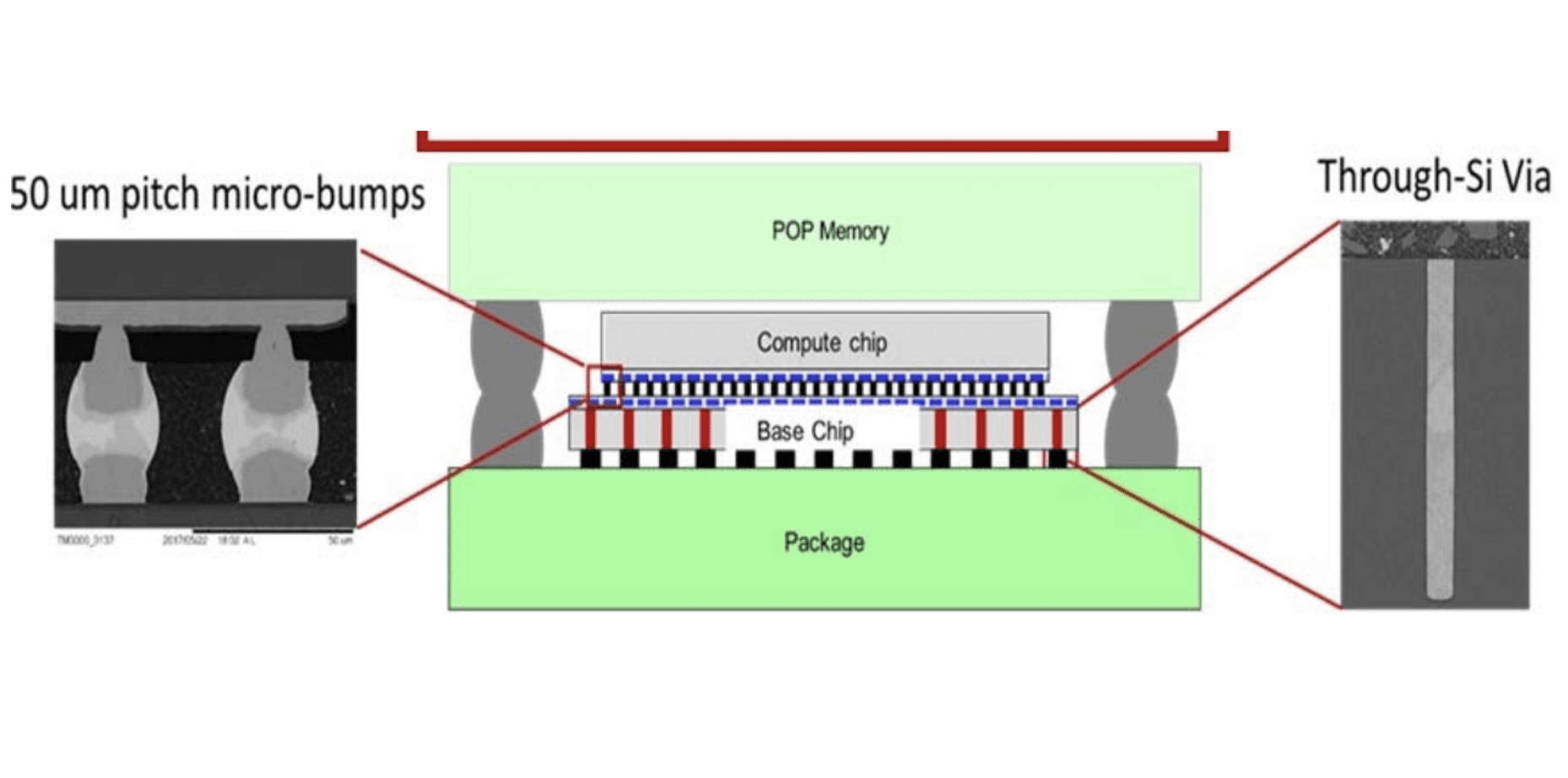
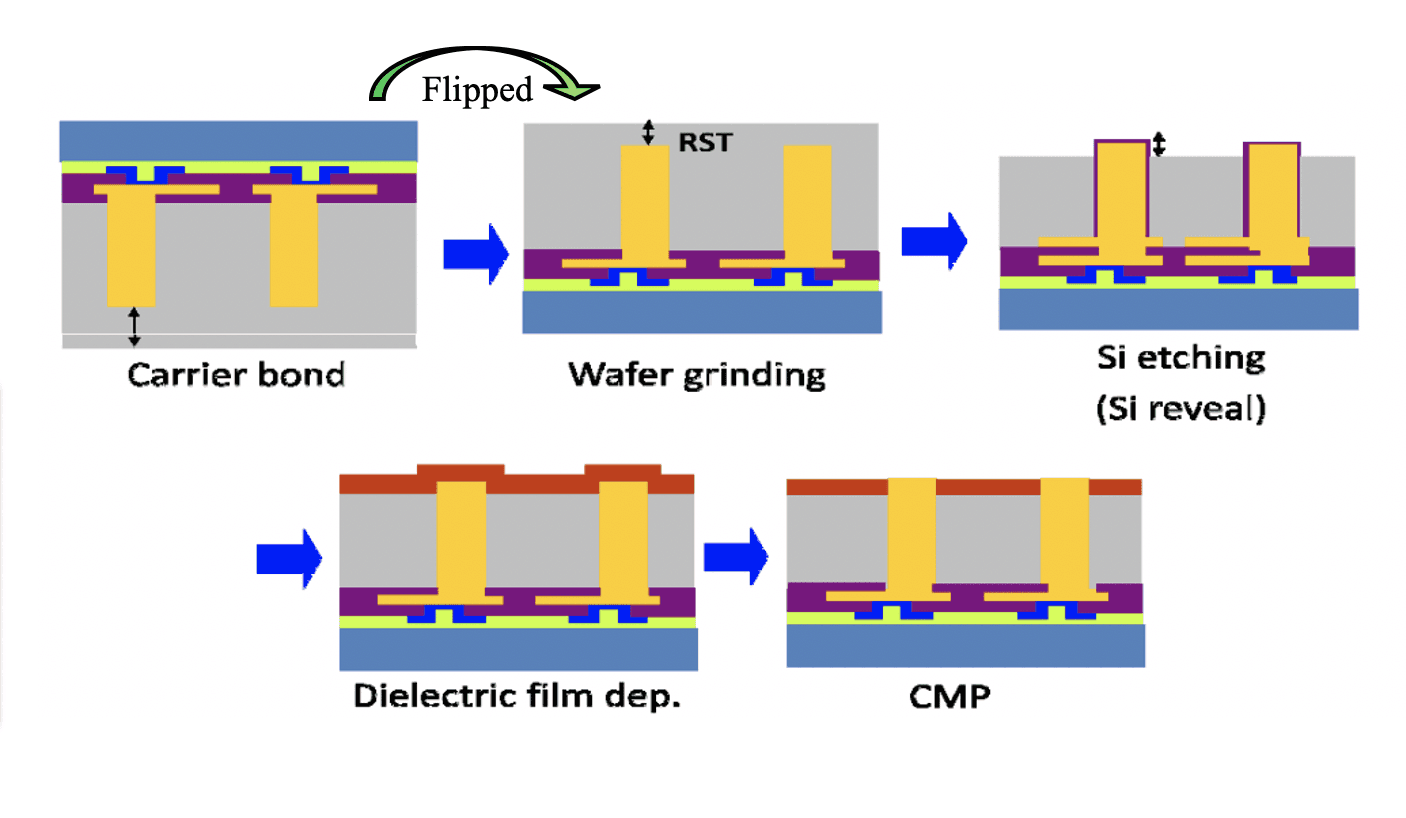
Poor support for spatial understanding
3D chip structures are hard to understand with traditional flat materials.
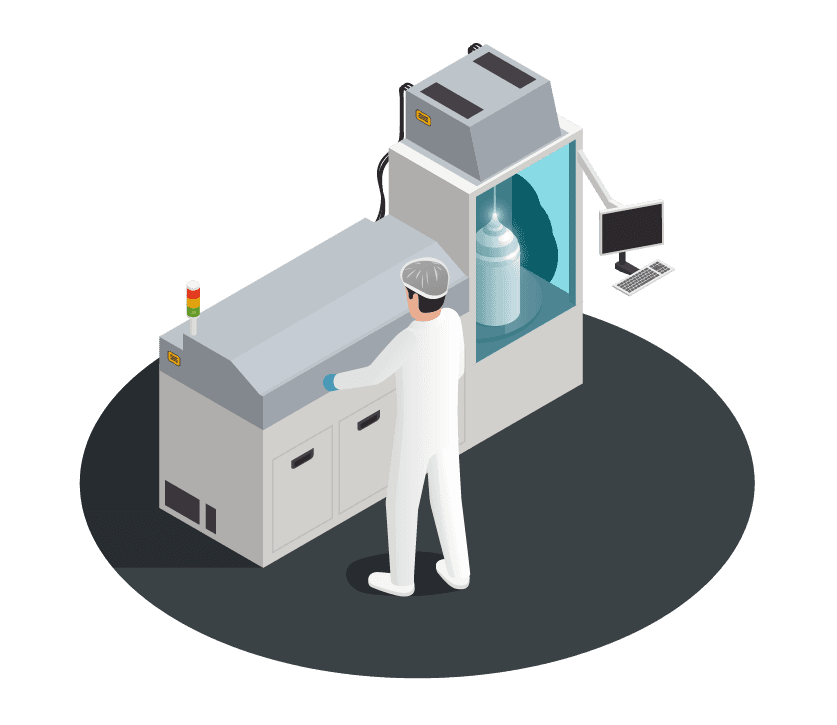
Lack of practical laboratory experiences
Hands-on labs are limited for students due to cost and feasibility.
APPROACH
My goal was to create a learning tool that could overcome these challenges.
Partnering with the University of Florida’s Electrical & Computer Engineering Department, we decided to create a tool that could be used in their courses.
…what if we leverage mixed reality?
Through additional brainstorming sessions with semiconductor experts and educators, I realized that MR technology could tackle these pain points all at once.
Pain Point 1
Poor support for spatial understanding
3D visualization
Make learning easier with intuitive visualizations of complex chip structures.
Pain Point 2
Lack of practical laboratory experiences
Hands-on practice
Enable lab experiences virtually beyond physical and resource constraints.
RESEARCH
I tested the concept.
Since MR is an emerging technology, there was limited guidance to inform the design. So I tested an MVP to inform design direction and reduce uncertainties. To better understand user behavior, I let them think-aloud while interacting with our MVP and recorded observation notes.
Goal
Identify potential usability risks
Participant
12 Engineering students
Method
Think-aloud protocols, Survey
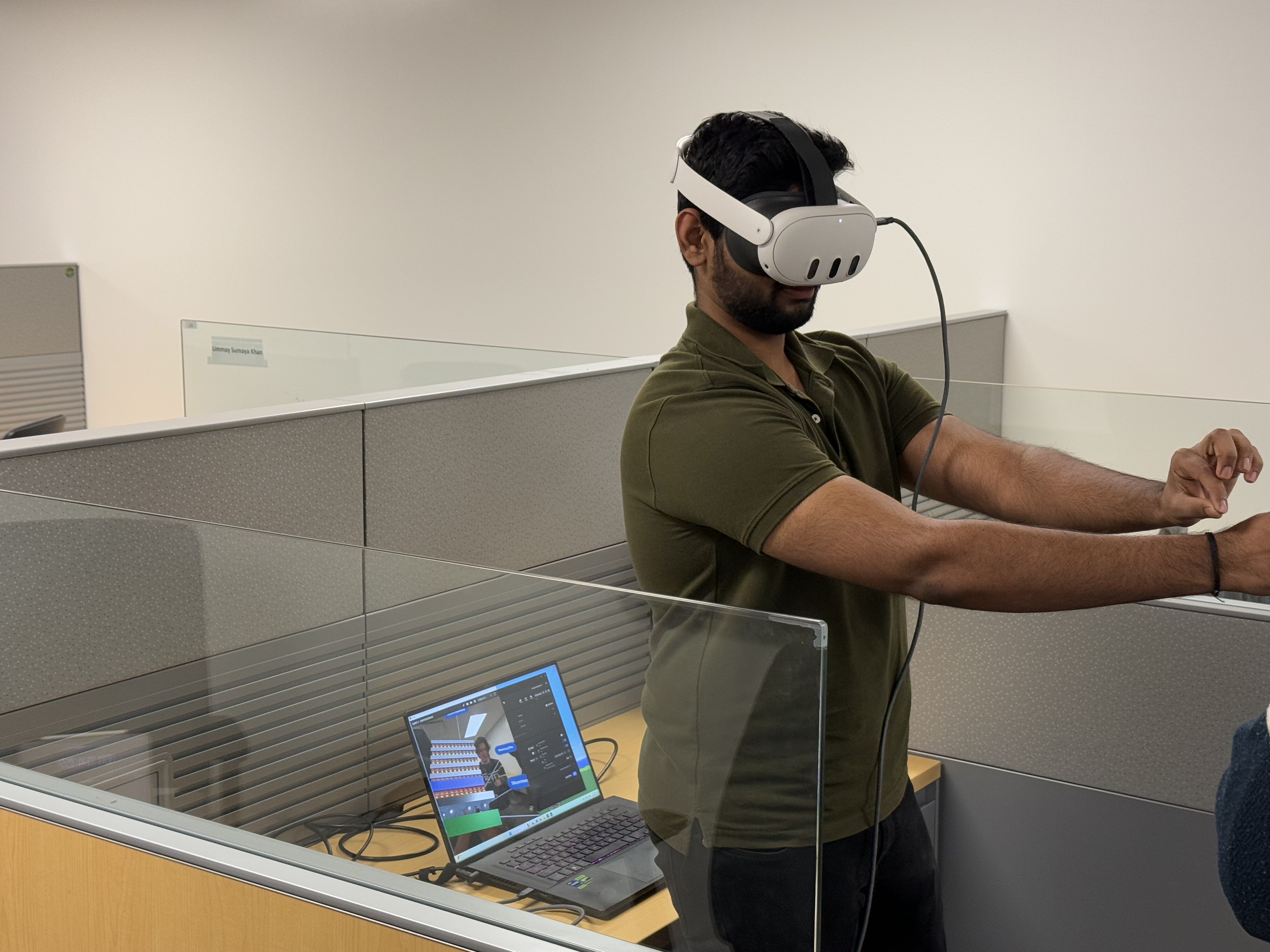
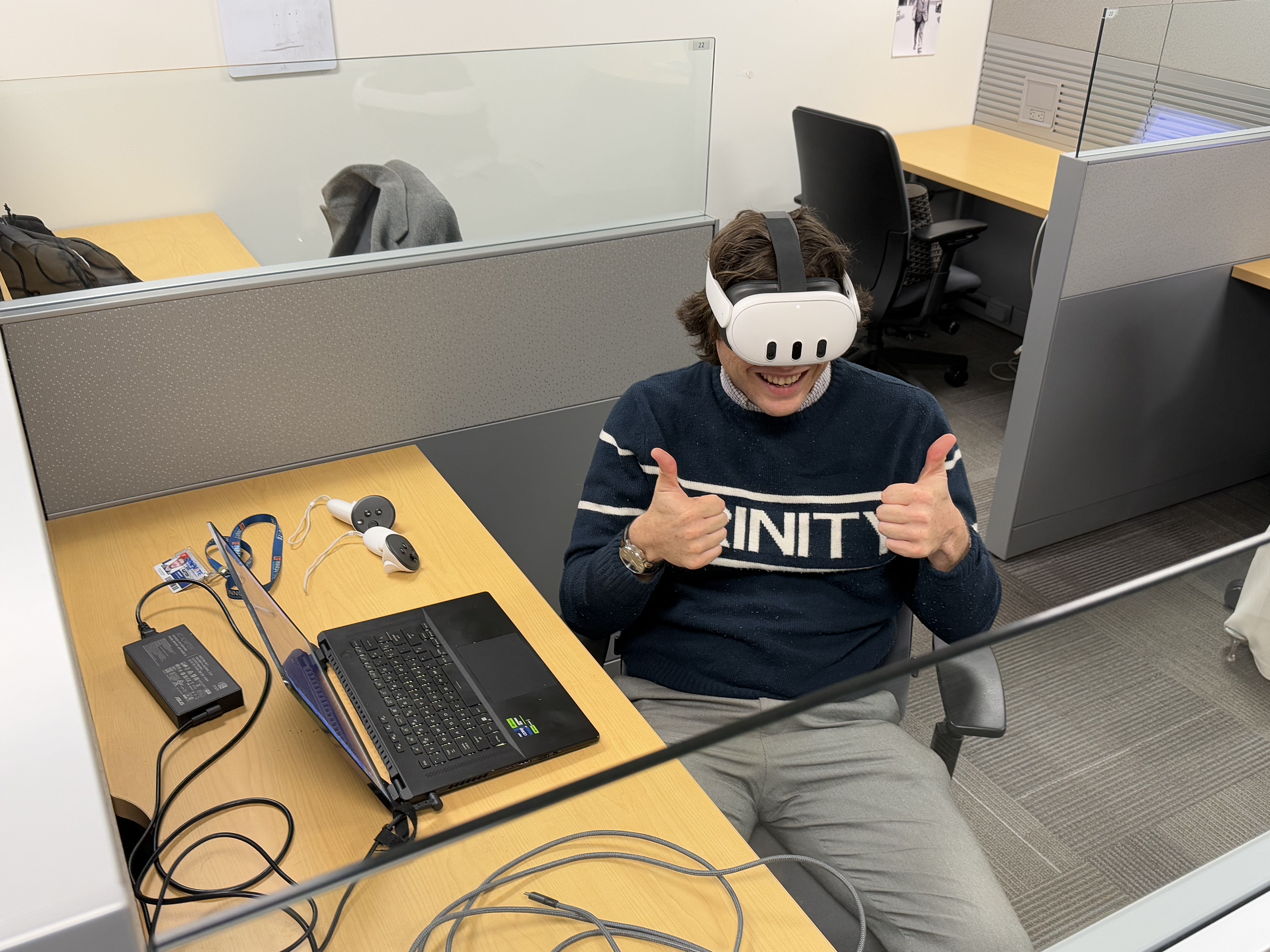
…and found inefficient design creates wrong cognitive load, which can negatively impact learning.
Usability issues found!
When users tried to grab or interact with virtual objects to complete tasks, they often failed to locate the objects which led to interaction errors. This happened because in MR environments virtual objects blend into the physical background and cause visual confusion for users.
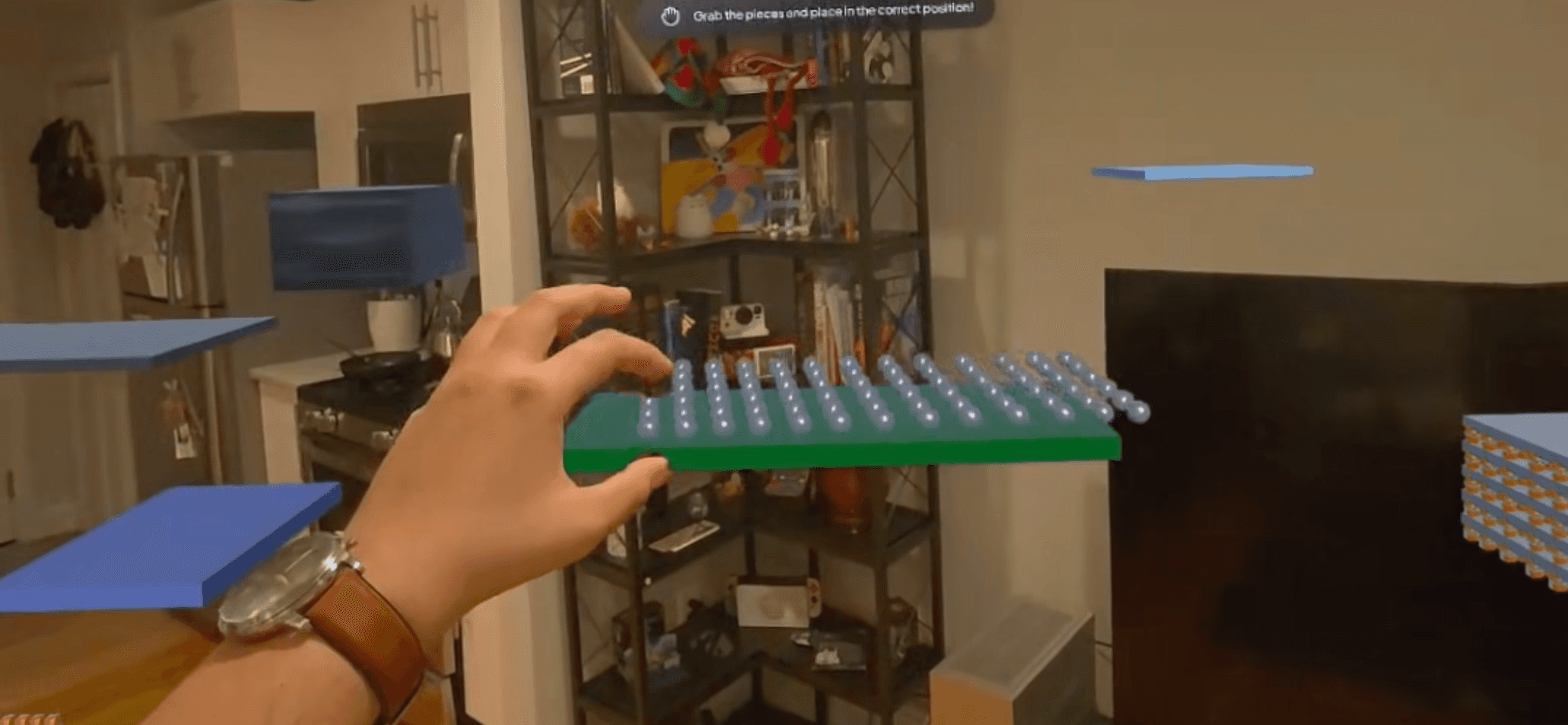
Then, how might we design MR learning experiences to manage cognitive load more efficiently?
To identify strategies for better managing cognitive load, I worked with education and HCI researchers to translate learning theories into concrete design decisions.
Cognitive overload!
🤯
extraneous load
Unnecessary load from interaction failures.
🤯
🤯
🤯
🤯
💥
💥
💥
We don't want to waste our brain power like this..
My brain is working!
🤓
germane load
Productive load used for actual learning.
💥
💡
💡
💡
💡
📚
📚
📚
This looks right.
ITERATE
Strategy 1
Add visual clarity through organization and signifier.
Signaling Principle
Cognitive Theory of Multimedia Learning
Before
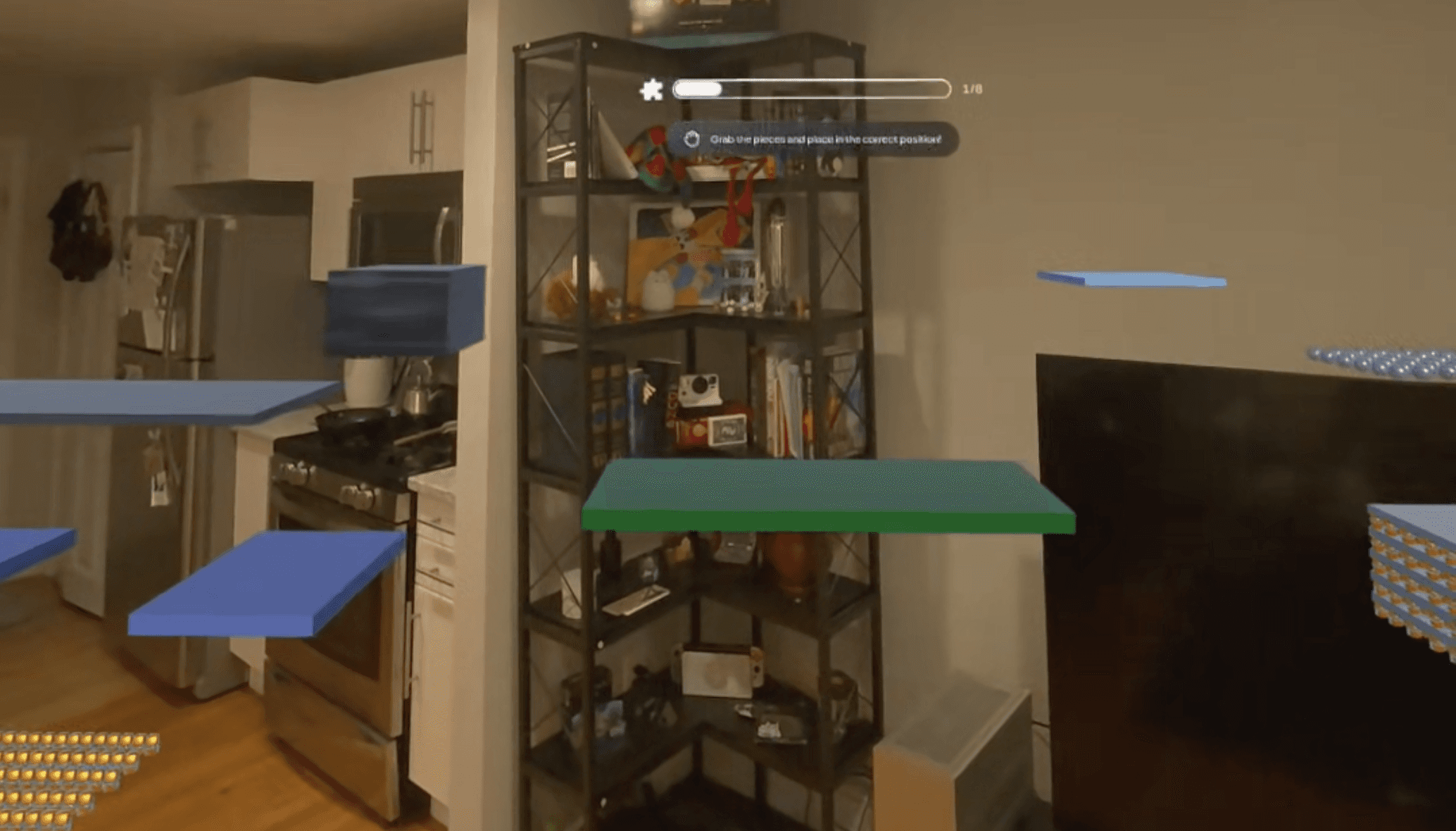
Virtual objects were scattered throughout the scene.
After
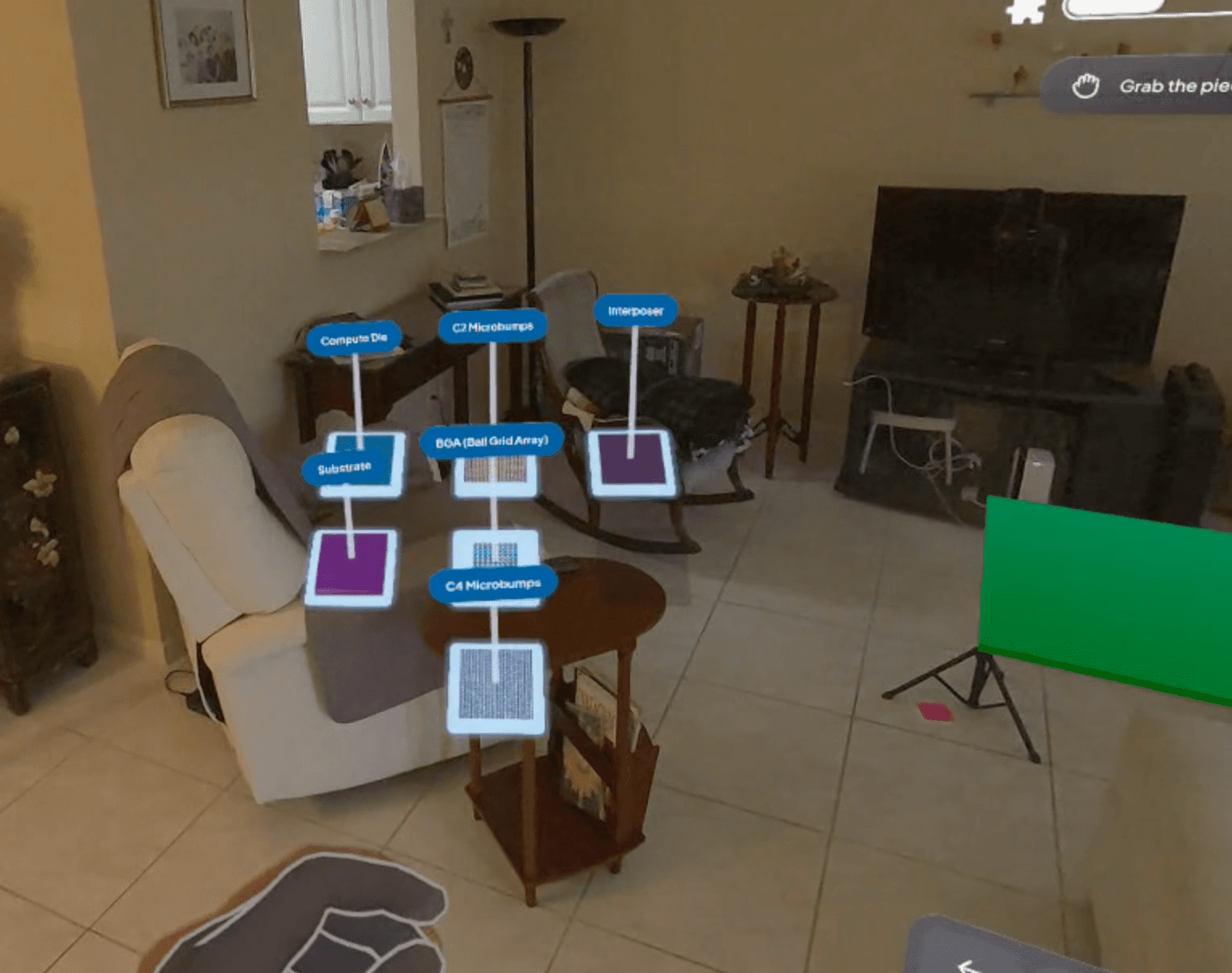
I anchored the objects onto the grid.
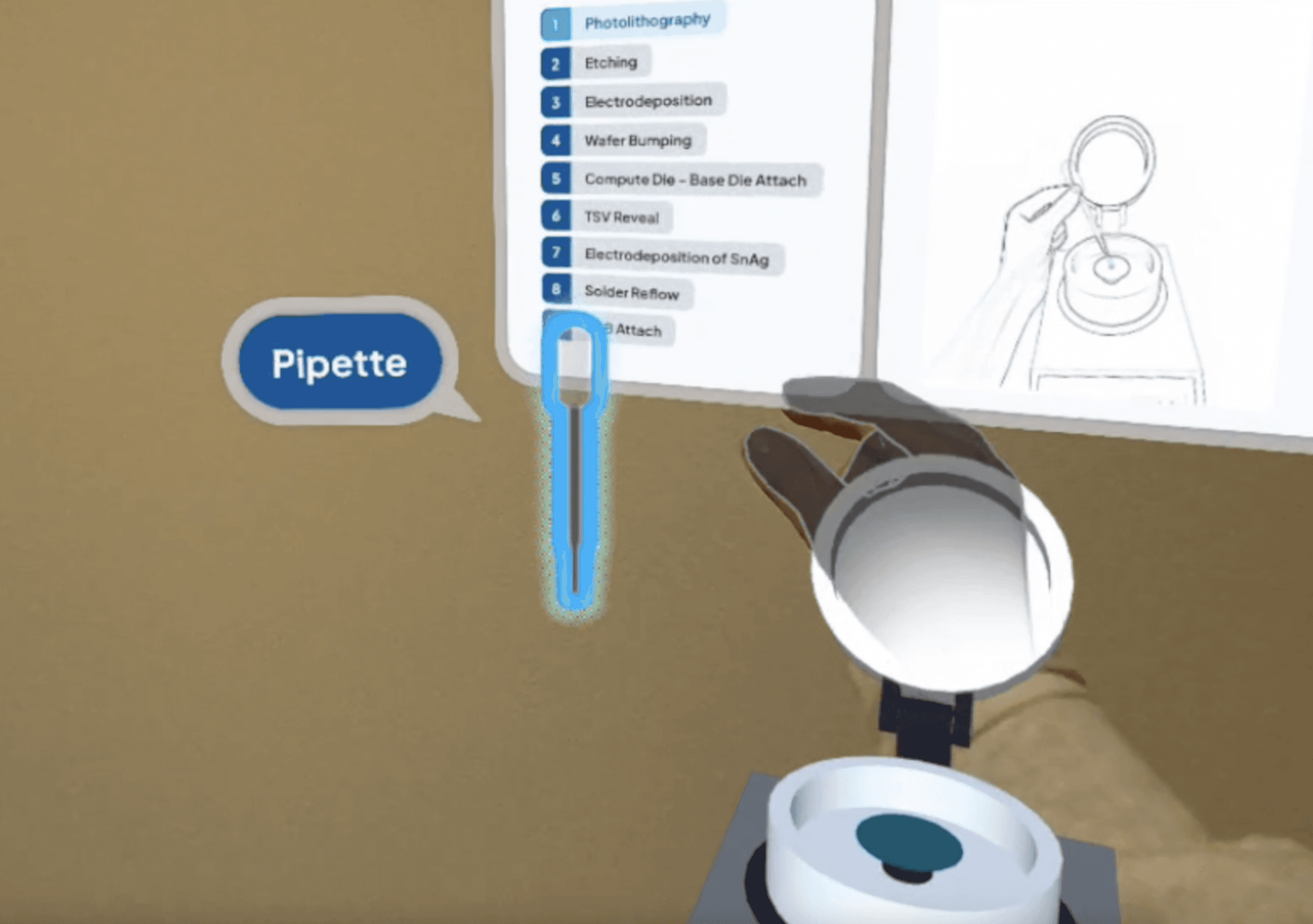
Highlights
I signified interactable items.
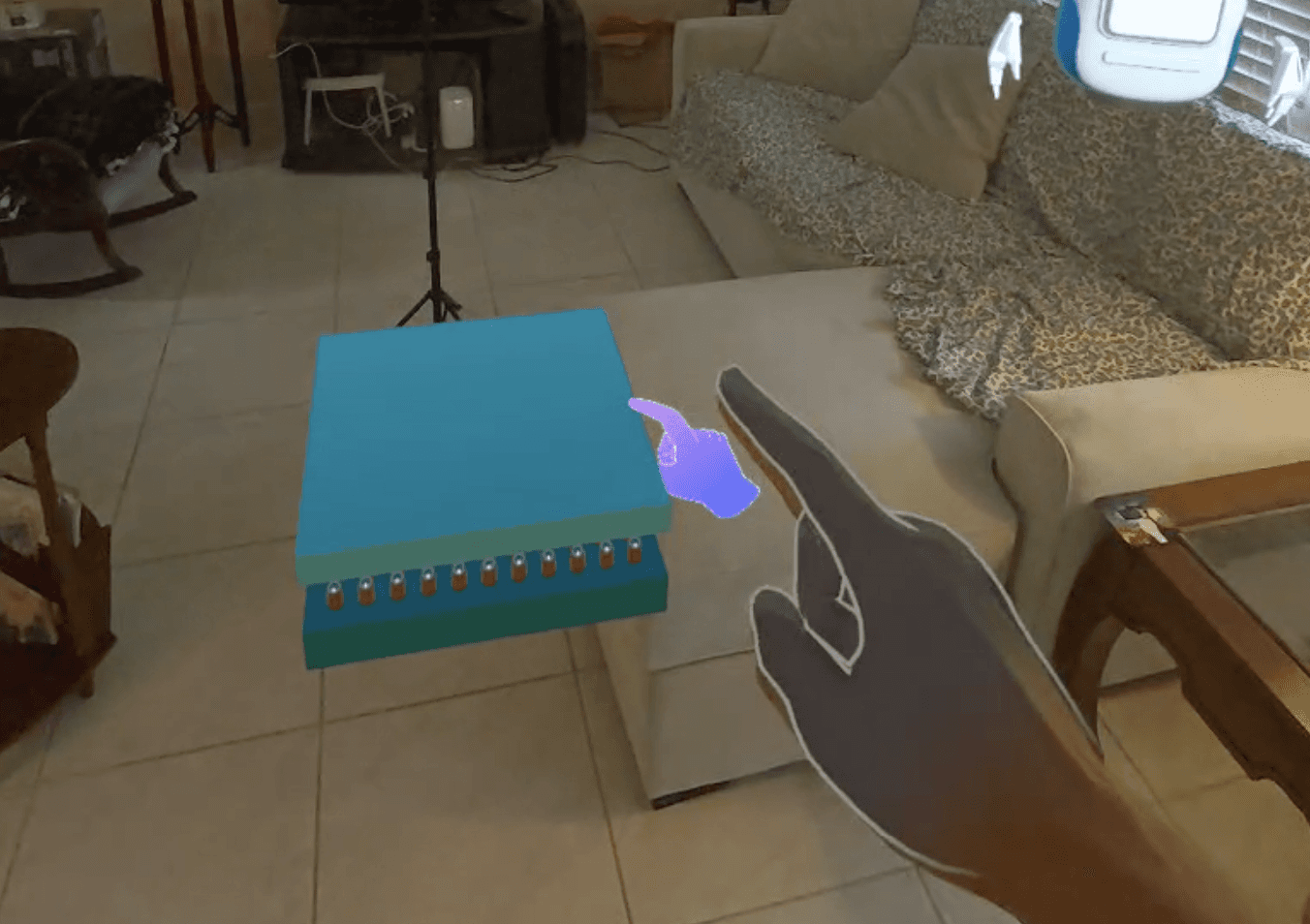
Guiding Hands
I directed user attention for a clear guidance.
Strategy 2
Chunk learning into digestible pieces.
Segmenting Principle
Cognitive Theory of Multimedia Learning
Modular Lessons
STEP 1
Learn
Goal
Identify key components and their functions in chip structure
User Task
Interact with 3D chip component models with accompanying audio explanations
STEP 2
Assemble
Goal
Reinforce comprehension of the components and their relationships in the structure
User Task
Place component pieces in correct order to build complete structure
STEP 3
Fabricate
Goal
Understand the chip fabrication process by linking structural elements to procedural flows
User Task
Perform hands-on fabrication tasks to build the chip
Step-By-Step Fabrication
Fabrication Process
Photolithography
01
Etching
02
Electrodeposition
03
Wafer Bumping
04
Compute Die -
Base Die Attach
05
TSV Reveal
06
Electrodeposition
07
Solder Reflow
08
PCB Attach
09
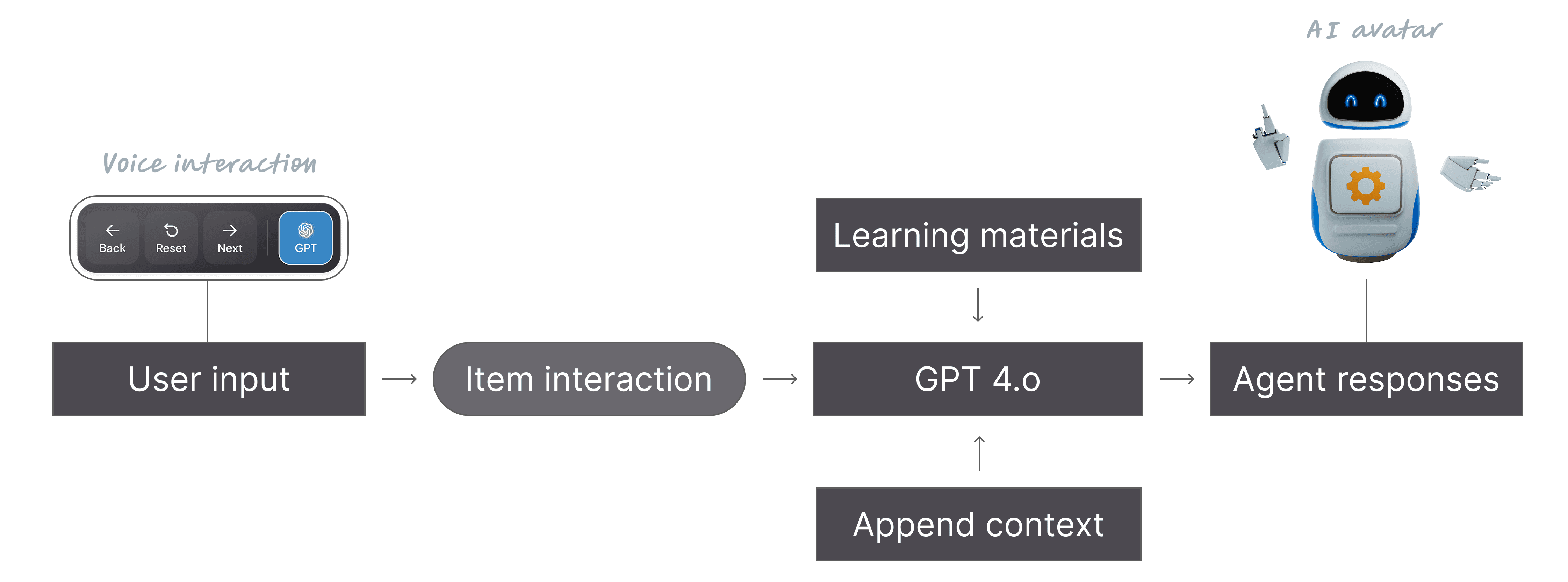
Strategy 3
Resolve questions instantly with AI support.
I worked with the engineering team to integrate a fine-tuned GPT API into the system to provide learners with timely support and encourage active learning.
FINAL SOLUTION

Learn
Let students explore complex chip structures in 3D and full 360 degrees view.
Assemble
Reinforce spatial understanding through interactive LEGO-like quiz.

Fabricate
Practice fabrication process through hands-on tasks.
AI teaching assistant
Address learners' questions in real time with contextual feedback throughout the learning experience.
TEST
Evaluating ChipXR.
I used mixed-methods to evaluate the app comprehensively, and conducted two rounds of user testing.
Qualitative Evaluation
Since this tool was designed for university courses, I needed to evaluate the tool and how it could be implemented in real classroom settings. So, I decided to gather feedback directly from students enrolled in the class.
Goal
Get in-depth insights from target users
Participant
9 students from target course
Method
Think-aloud protocols, Focus groups
Tool
MAXQDA
Study Design

Step 1
Think-aloud session
Engage with ChipXR while thinking-aloud
Step 2
Focus groups
Interviews with 3 participants per session
Quantitative Evaluation
I additionally conducted an experiment to evaluate whether ChipXR successfully supports learning quantitatively. To get enough participants, I expanded the criteria and recruited engineering students from related majors using convenience sampling.
Goal
Evaluate learning effectiveness
Participant
24 engineering students
Method
Survey
Tool
Qualtrics, R
Study Design
Within-subjects comparative study
Since the AI teaching assistant was newly introduced after the iteration, I evaluated three conditions: ChipXR with AI, an MR-only version without AI, and a video-based version that mirrored traditional teaching methods.
ChipXR (MR + AI)
Condition 1
MR Only
Condition 2
Video
Condition 3
Process
To ensure reliable results, I randomly assigned participants to each condition. They completed a pre-survey, engaged with the assigned condition in order, and then completed a post-survey after each session.
Participants Random Assignment
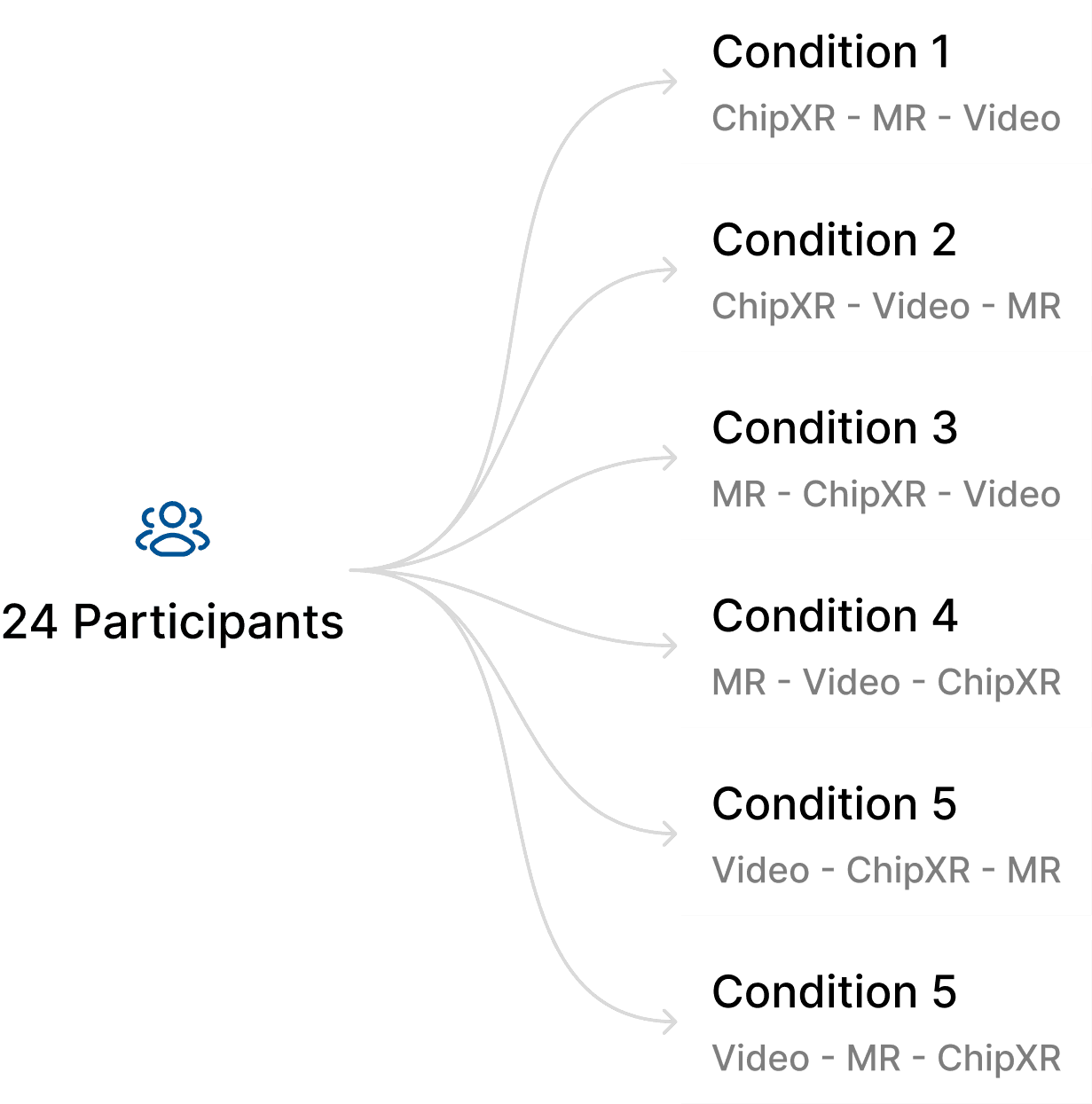
Process Example
Survey
ChipXR
Survey
MR Only
Survey
Video
Survey
Survey Design
In the survey, I measured the following items to see how well our iterations helped manage cognitive load and supported learning across different aspects:
Key Survey Items
Knowledge
Cognitive load
Engagement
Usability
Conceptual
Procedural
Visual-spatial
Intrinsic
Extraneous
Germane
Skinner, Kindermann, and Furrer’s engagement framework
System Usability Scale (SUS)
IMPACT
ChipXR enhanced spatial understanding, managed cognitive load efficiently, and was more engaging than a traditional video lecture.
Spatial Understanding Gain
1
Video
1.21
ChipXR
Engagement
3.43
Video
4.65
ChipXR
Cognitive Load
2.11
Video
1.6
ChipXR
Extraneous Load
4.08
Video
4.62
ChipXR
Germane Load
Quotes from focus groups
“ Videos usually have a couple side views,
but the 360 interactive view made it easier to visualize.”
“ Getting that hands-on experience really helped solidify
what I had only understood in a vague way before.”
“ Especially in fabrication—mistakes are expensive.
That’s why VR is great. You can fail without breaking anything.”
Also..
This project was accepted as a paper at CHI 2026.
ChipXR was accepted to CHI 2026 with 25% acceptance rate!
Stay tuned for more details on the publication!
TAKEAWAYS
Leverage stakeholder feedback across the design process.
Co-designing with experts and testing with students helped me overcome my knowledge gap and usability issues. Involving the right stakeholders at the right stages, can help solve uncertain problems better than trying to address them alone.
Don't just rely on tools, actively monitor throughout the research process!
I initially used Qualtrics’ random assignment feature to evenly assign participants to each condition. During the study, I discovered that the feature was not working properly, so I manually managed the remaining assignment to ensure balanced conditions. While tools are useful, continuous monitoring is essential to catch and address unexpected issues.
Up next
ChipQuest
Gamifying the semiconductor manufacture to inspire the future workforce

Made with ♡ & ☕︎ in Bay Area, CA
— Serene © 2026