INCLUSIFY
Visualizing racial microaggressions to raise awareness.
Role & Team
UX Designer working with 1 UX Designer
Timeline
Nov 2023 - Jan 2024
Tool
Figma
Google Workspace
Maze
Methods
Interview, Survey
Impact
Significantly increased the racial prejudice recognition in 4 out of 5 expressions.
Published at CHI 2024 Student Design Competition ↗, with only 12 teams selected and a 28% acceptance rate.
CHALLENGE
Racial microaggressions are difficult to detect
due to their subtle nature.
Racial microaggressions are subtle, often unintentional, discriminatory comments that convey negative assumptions about a person's race or ethnicity. These microaggressions contribute to unwelcoming environments for racial minorities. Compared to explicit racism, they often occur unintentionally and are harder to recognize, making them difficult to address.
"Where are you originally from?"
"California."
"Where are you from?"
I don't belong anywhere.
"You speak English so well!"
"Quiet"
"Nerdy"
"Spicy"
"You're such a Karen."
"Don't you like fried chicken?"
"Well.. I was born here."
APPROACH
Data visualization of people's experiences.
Early Design Concept
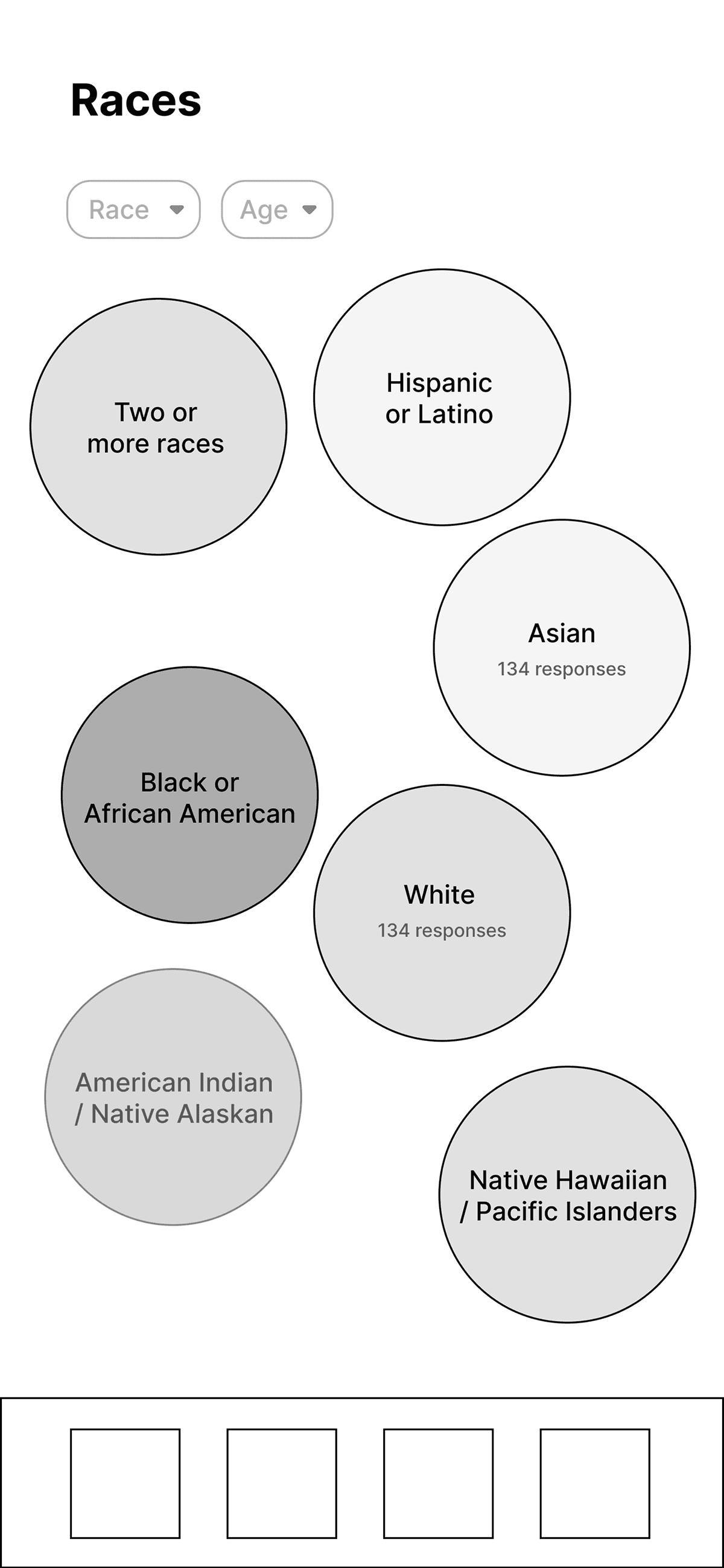
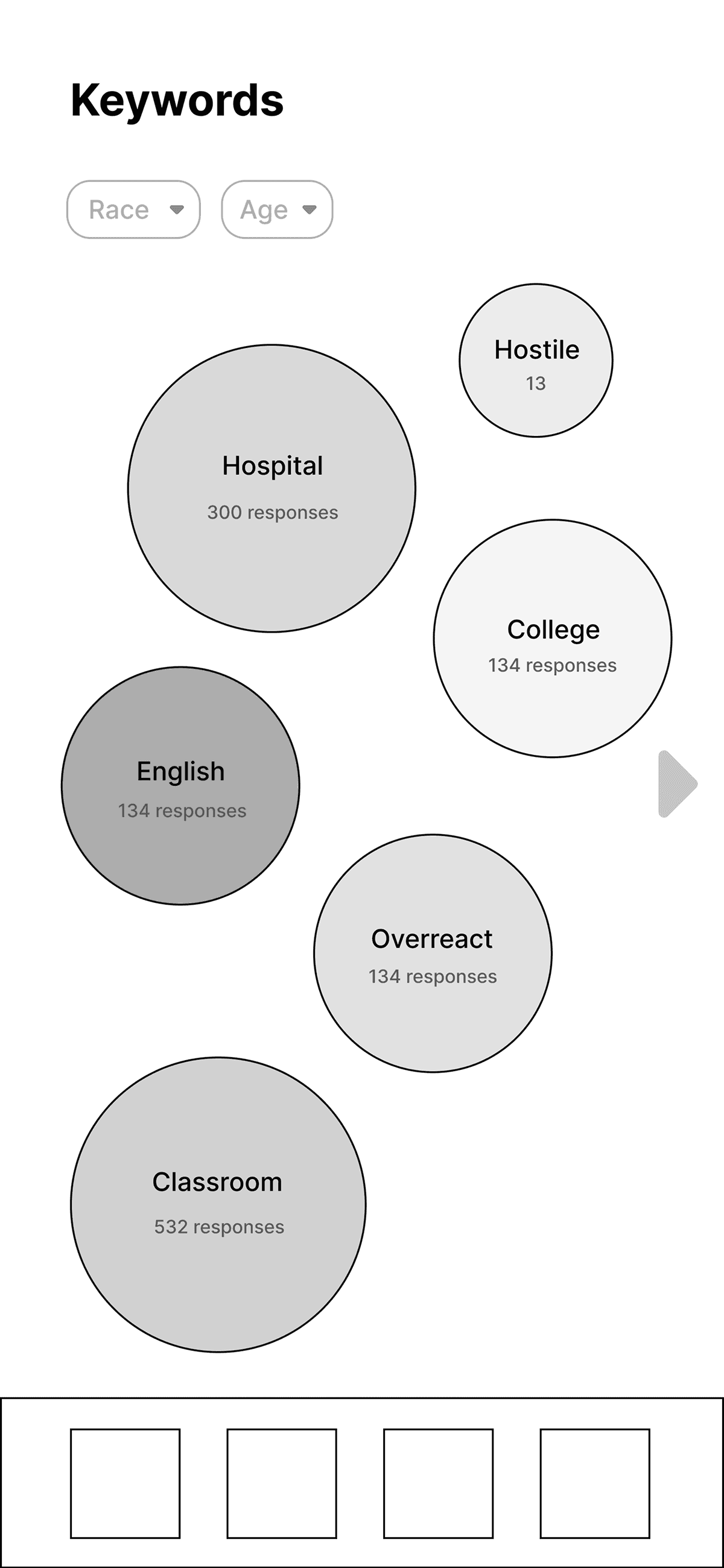
This project began with the idea that raising awareness and fostering mutual understanding could help reduce microaggressions in everyday life. With this in mind, I sketched an online platform that allows users to report and visualize their experiences.
RESEARCH
Gathering voices of
diverse individuals.
I used a mixed-methods approach to gain a deeper understanding of people’s experiences with racism and microaggressions, as well as feedback on early sketches.
Methods
In-depth Interview
with 4 participants from diverse racial backgrounds
Survey
with 43 participants from diverse racial backgrounds
Interview Insights
Insight 1
Participants felt embarrassed, excluded unsupported, and afraid to confront racism.
"In group projects, other team members didn’t
give me a chance to present, pointing out my English. I thought about reporting it to the professor, but I was unsure whether he would understand my perspective."
Insight 3
Fostering a sense of community was emphasized to address racism.
"As the community grows, it will be easier to challenge misconceptions and when things do not go well, I can always just retreat into the big black professional community."
Survey Insights
Insight 3
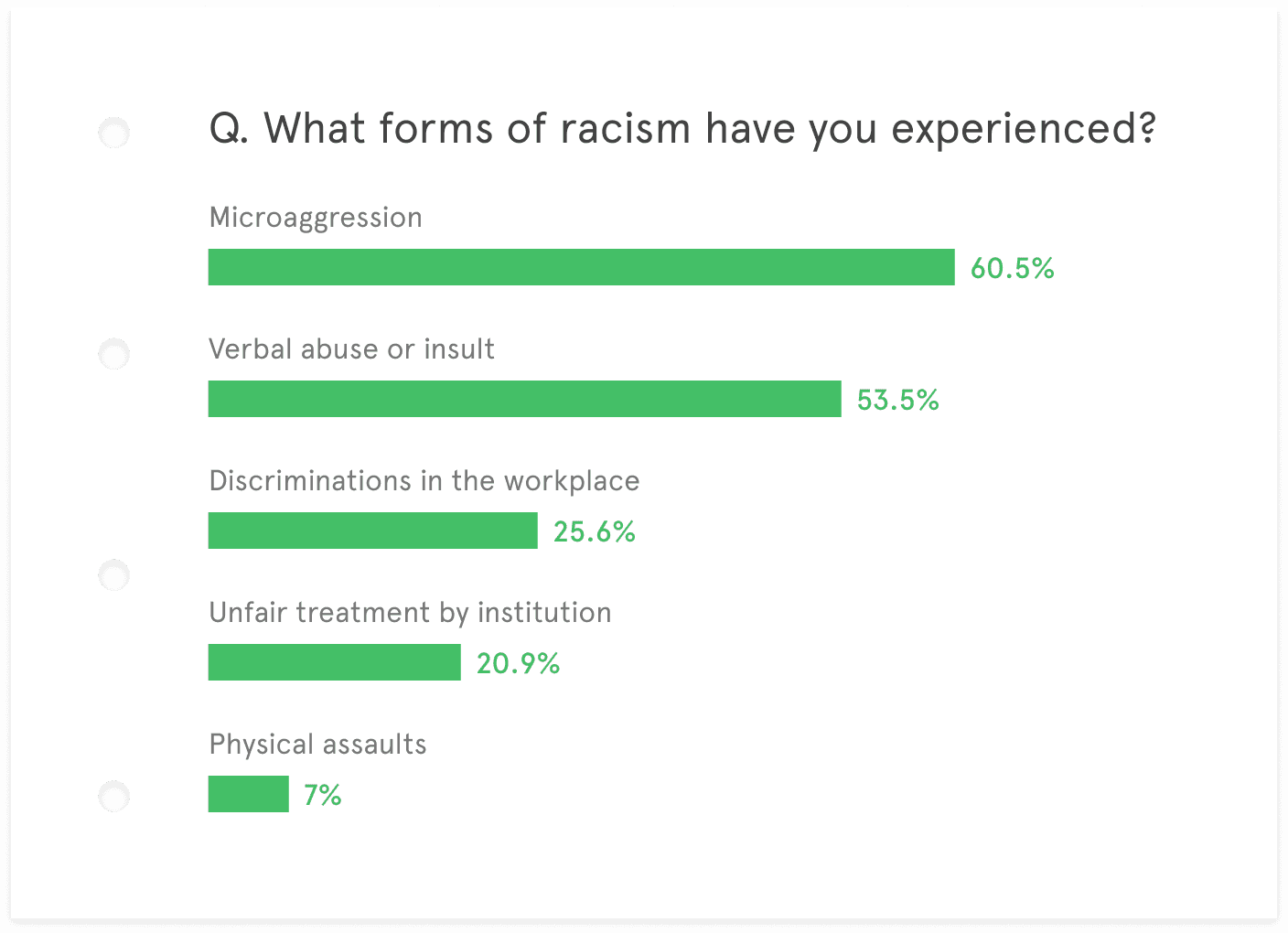
Verbal abuse and microaggressions were the most common forms of racism.
Insight 4
Participants preferred the focus to be on their experiences rather than on race.
Option A
Show keywords by race
Option B
Focus solely on keywords
Design Requirements
Based on these findings, I defined the design requirements:
Insight 1
Insight 2
Insight 3
Insight 4
Comprehensive yet anonymous reporting
Provide a supporting community
Highlight trending keywords
Focus on experience than on race
SOLUTION
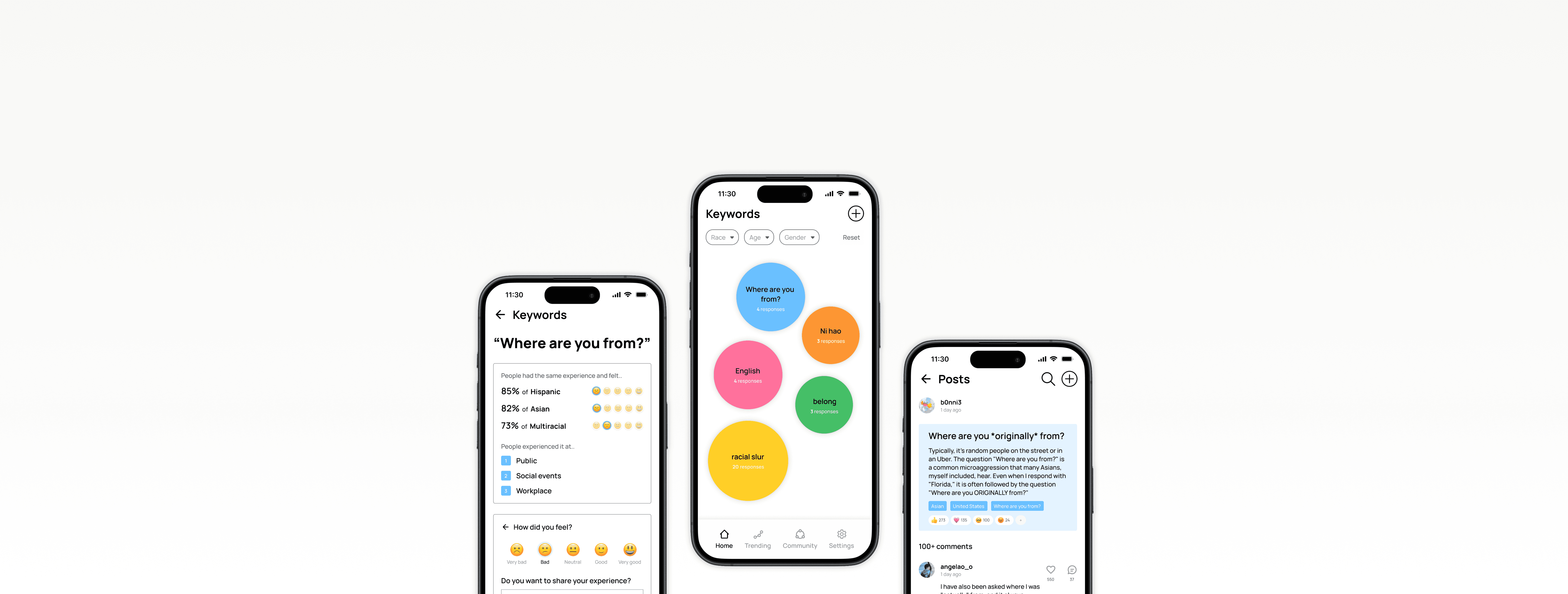
Inclusify, amplifying diverse voices.
Feature 1
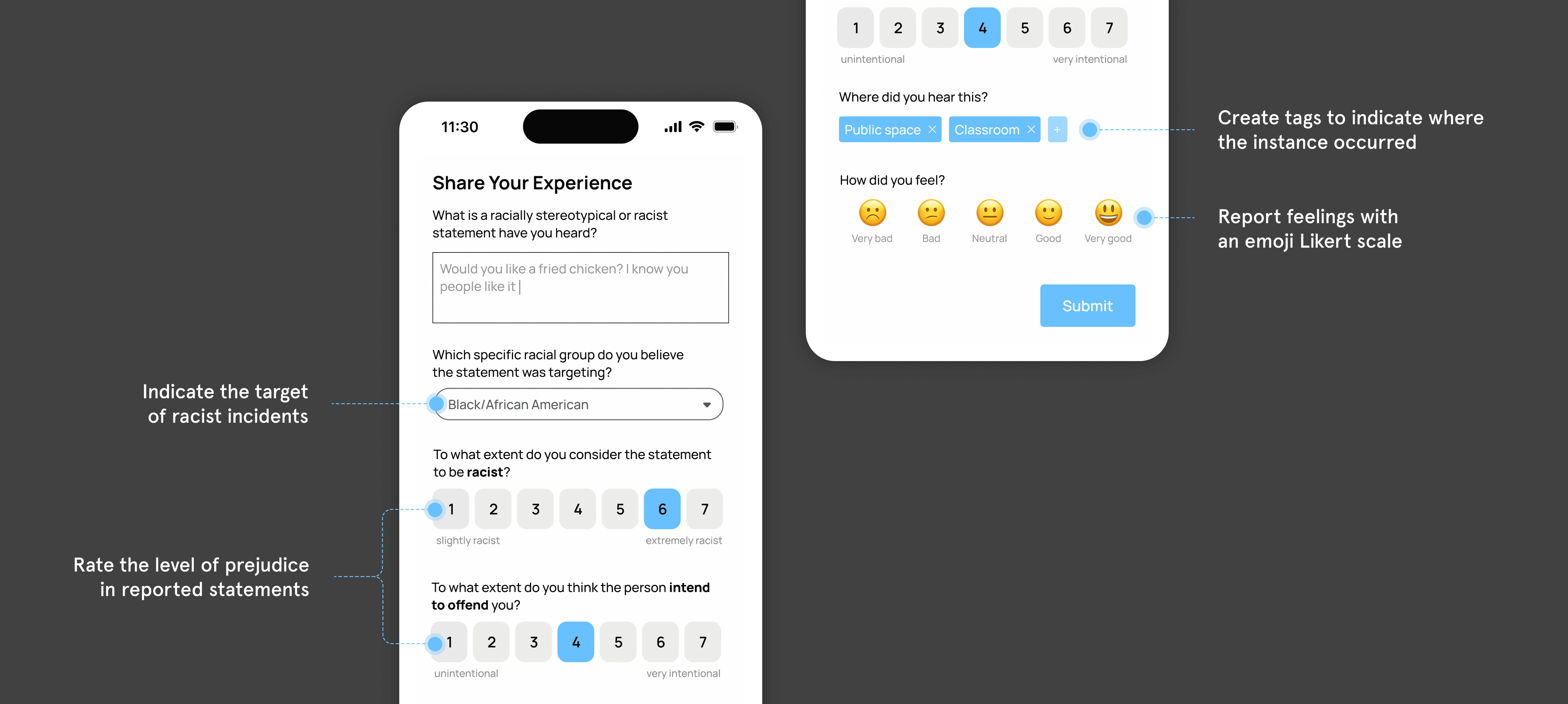
Report and Assess
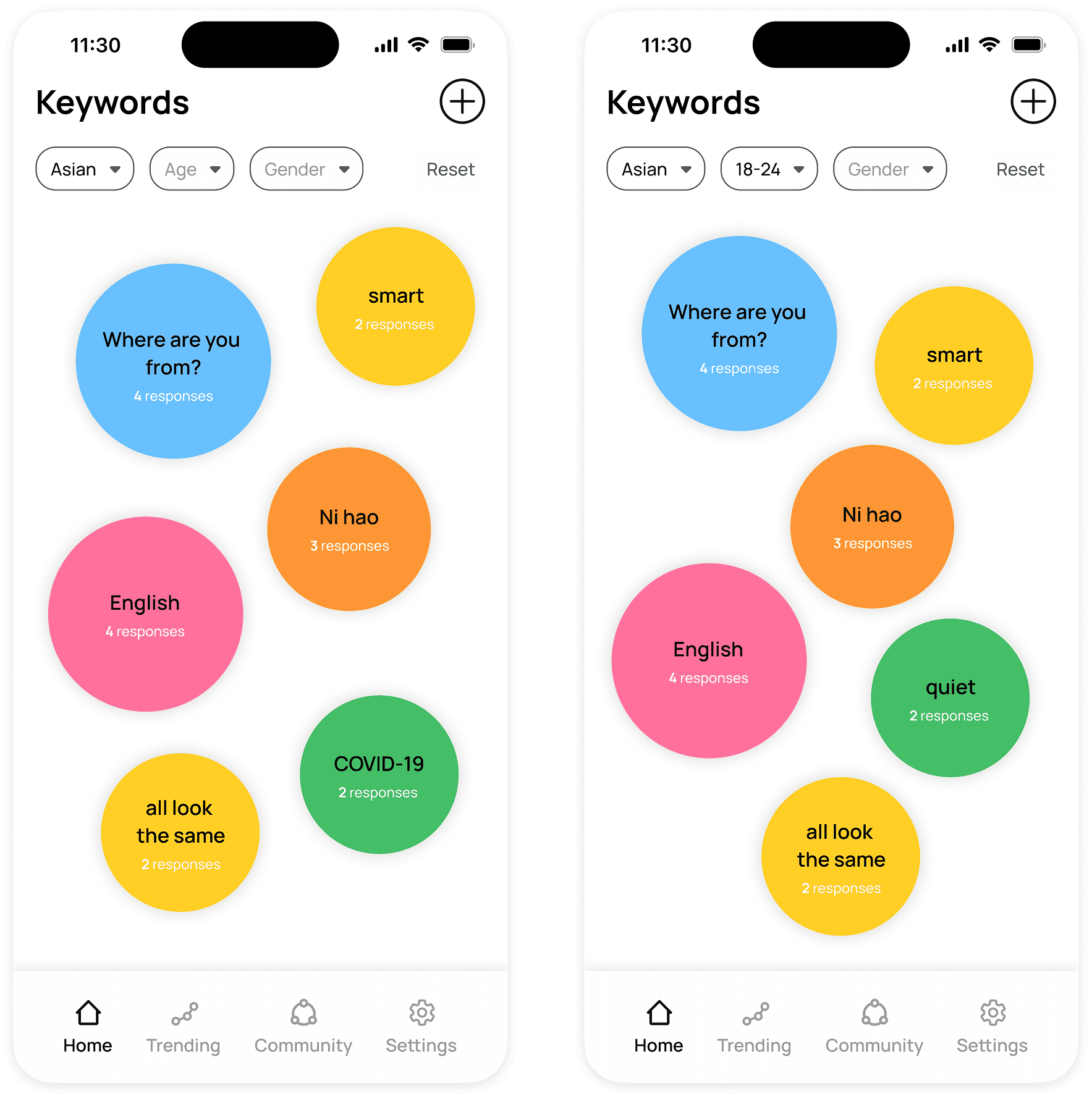
Collect more granular contexts around reported incidents to capture the subtle nuances of microaggressions.
Feature 2
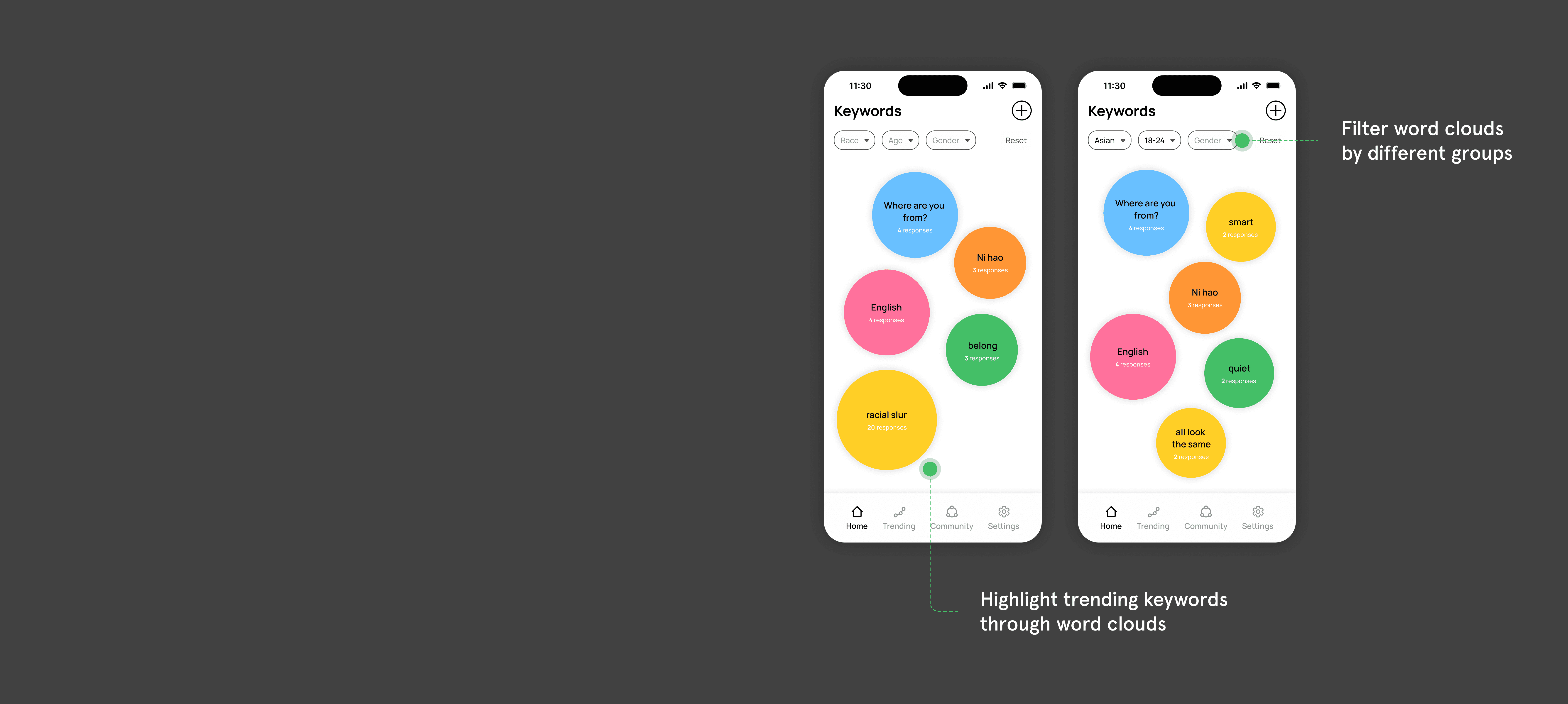
Word Cloud Visualization
Visualize people's experiences as keyword bubbles
extracted from user responses.
Feature 3
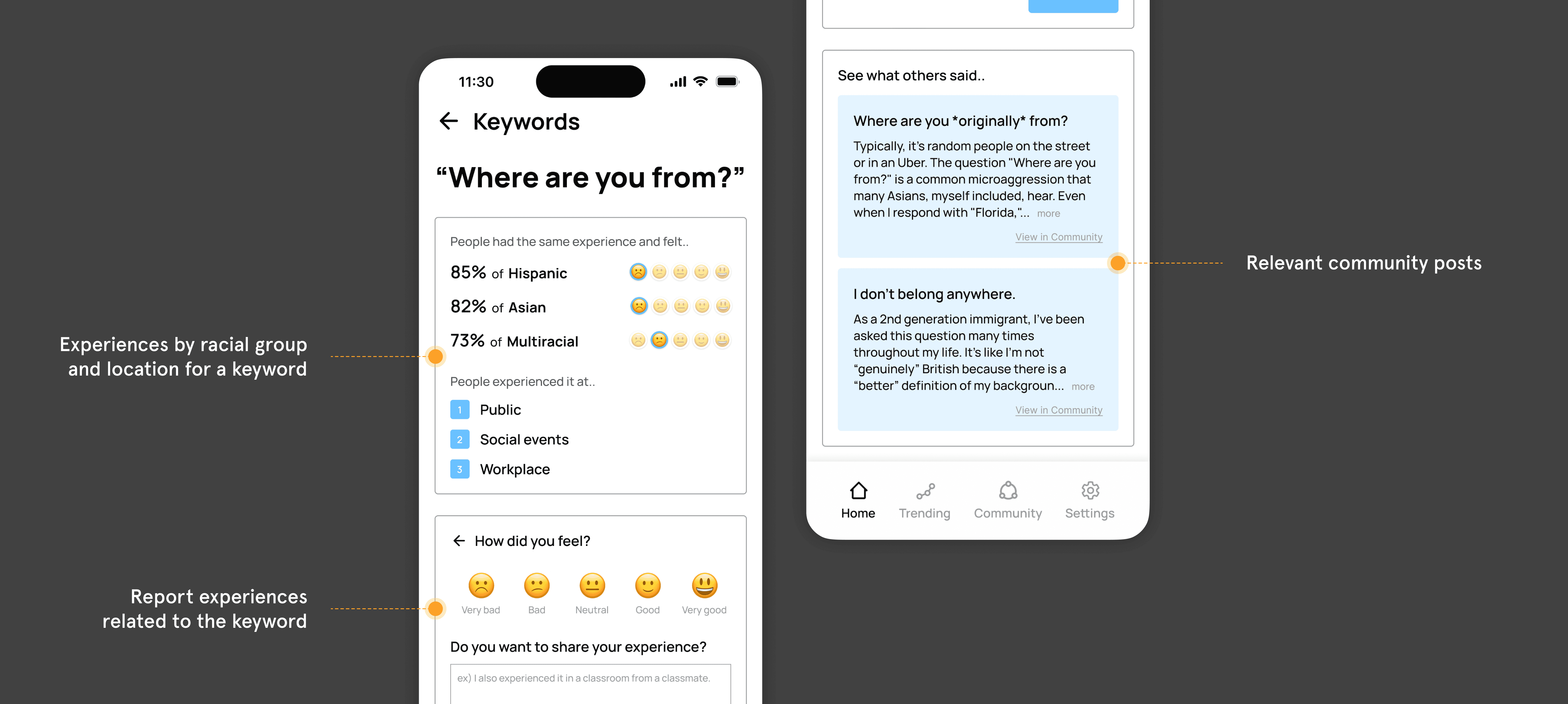
Summary and Insights
Deeper insights into others’ experiences
for each keyword to foster understanding.
Feature 4
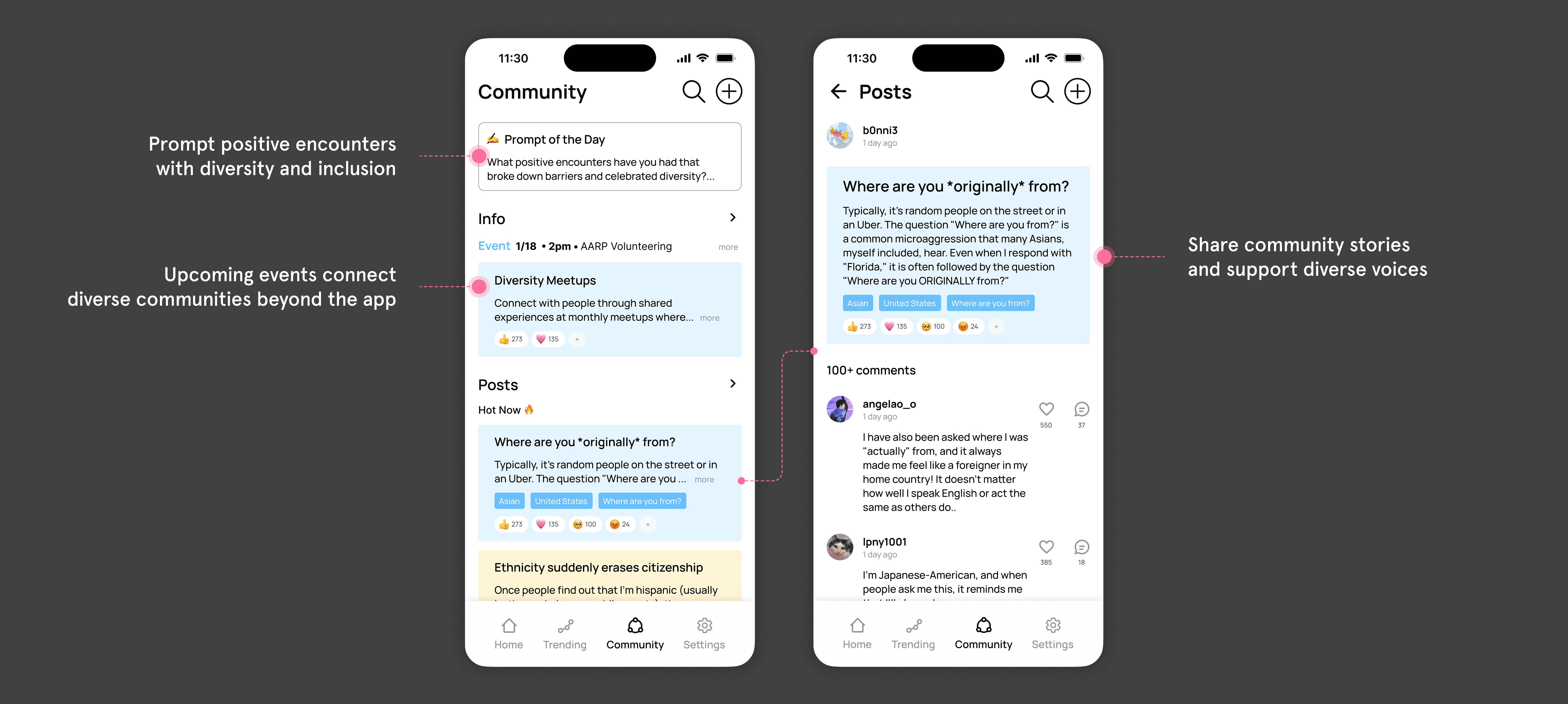
Community
Empathize and advocate for people across diverse backgrounds by creating meaningful connections.
TEST
Assessing the impact of Inclusify.
I conducted online user tests with 26 participants to evaluate the effectiveness of Inclusify in enhancing public awareness and usability.
Methods & Process
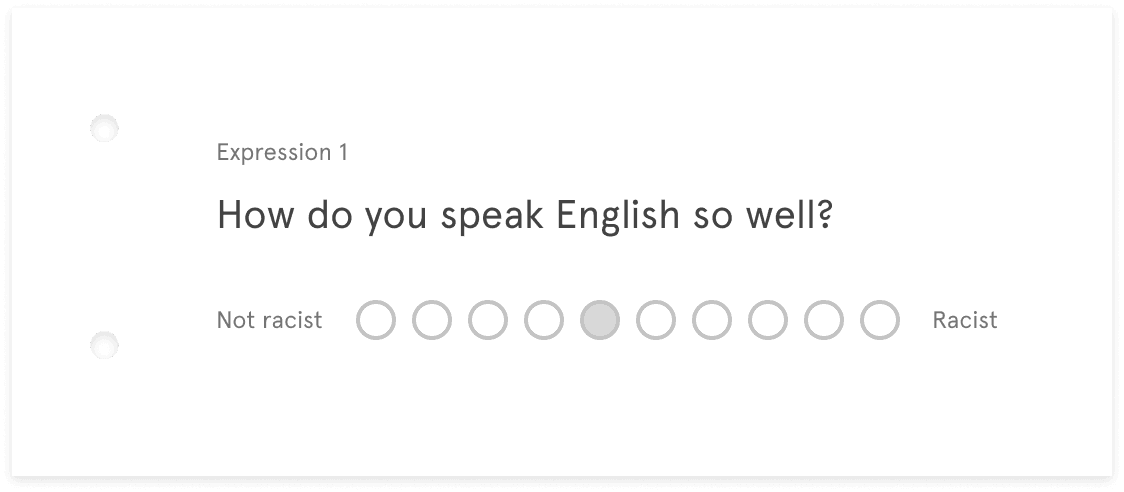
Step 1
Pre-test
Initial evaluation of
5 prejudiced expressions
Step 2
Interaction
Interact with Inclusify prototypes
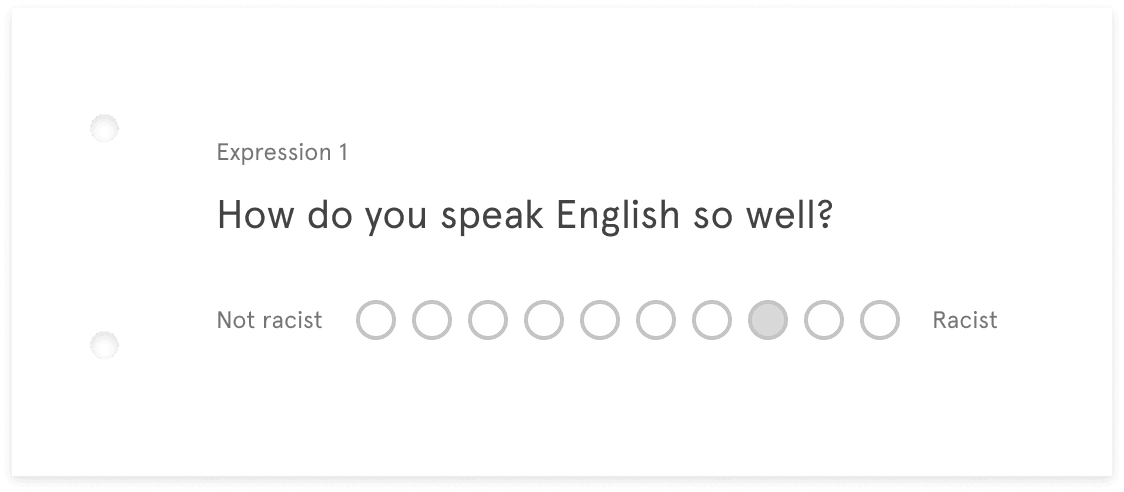
Step 3
Post-test
Reevaluation of the expressions
Usability testing (SUS)
IMPACT
Inclusify enhanced awareness of racial microaggressions with a user-friendly experience.
Prejudice Recognition
4
out of 5 expressions showed
a significant increase in awareness
Usability
73.6
Average SUS score
above recommended criteria
Feedback from user testing
"I think the app definitely helps with making people aware of different racial stereotypes and is a good place for people within marginalized communities to express frustrations."
"This app will significantly help people recognize microaggressions in our daily lives."
Also..
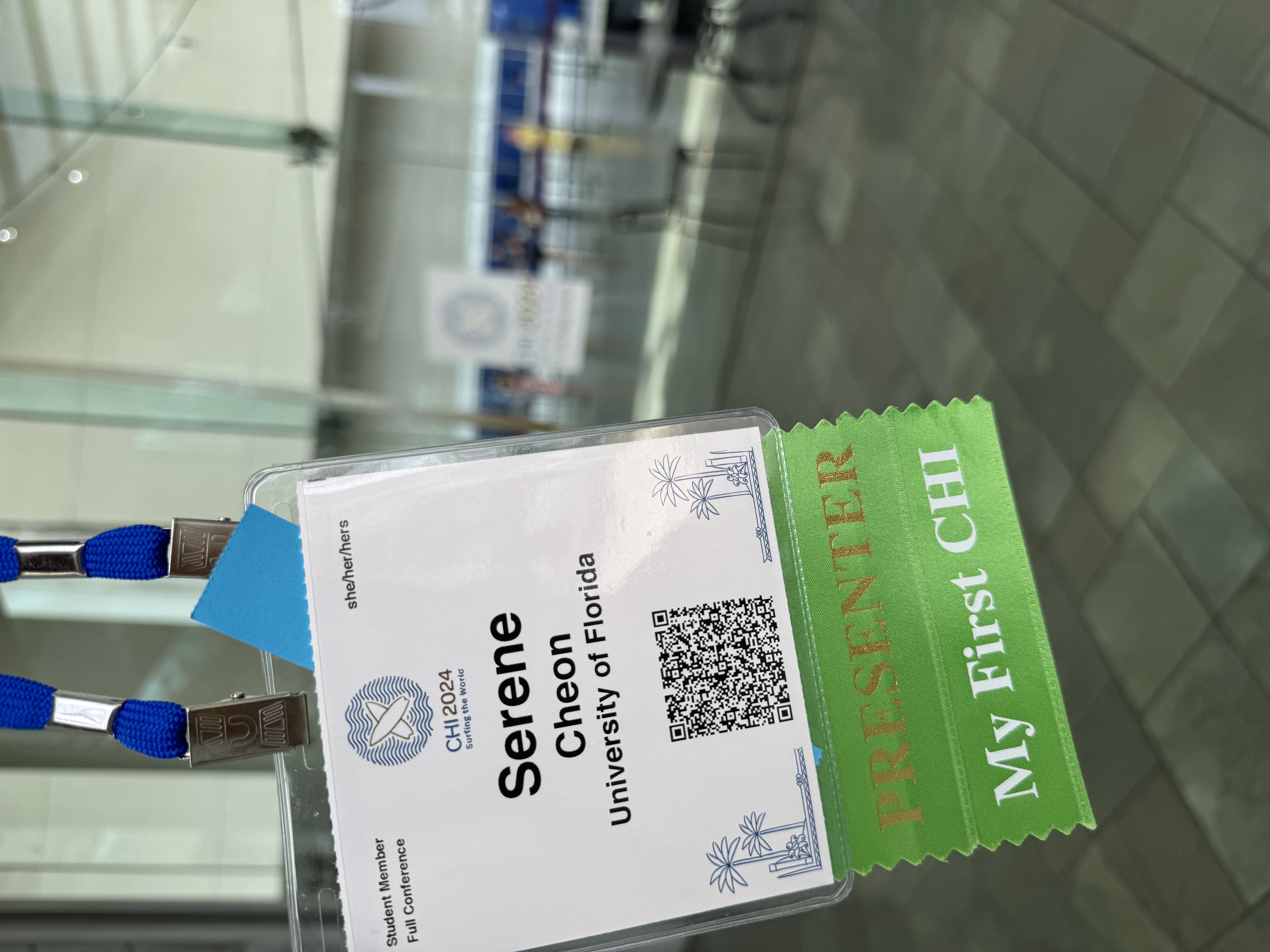
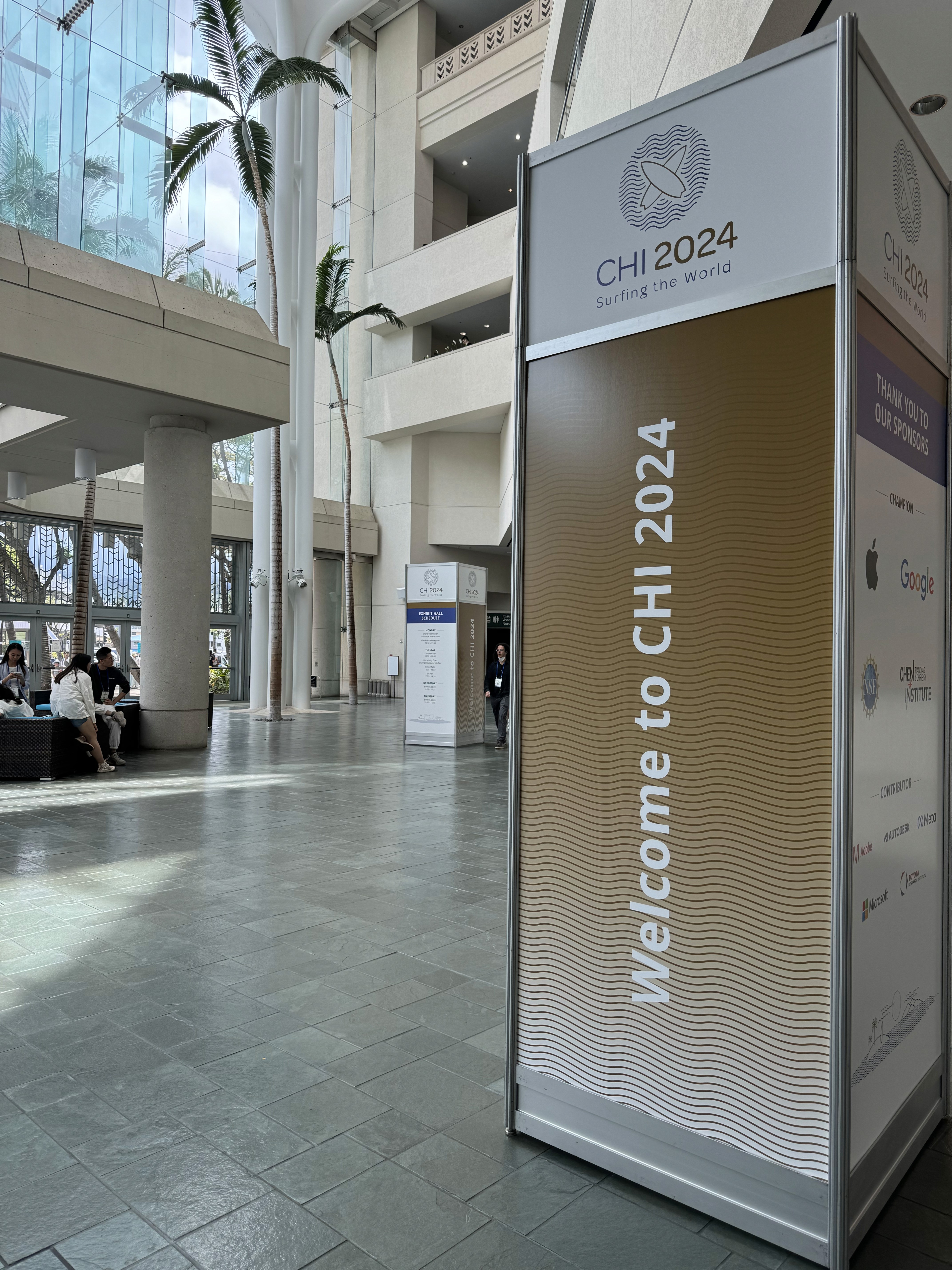
This project was accepted to 2024 CHI Student Design Competition.
Inclusify was selected as one of only 12 teams with 28% acceptance rate.
This was my first publication as a first author, and I had the opportunity to present it in Hawaii!
Check out our paper here.
TAKEAWAYS
Feedback from diverse users can help mitigate potential harms.
Through the survey, I found that participants preferred to focus on the experience itself. This insight was critical in identifying potential risks early and avoiding design choices that could unintentionally reinforce racial bias.


Made with ♡ & ☕︎ in Bay Area, CA
— Serene © 2026